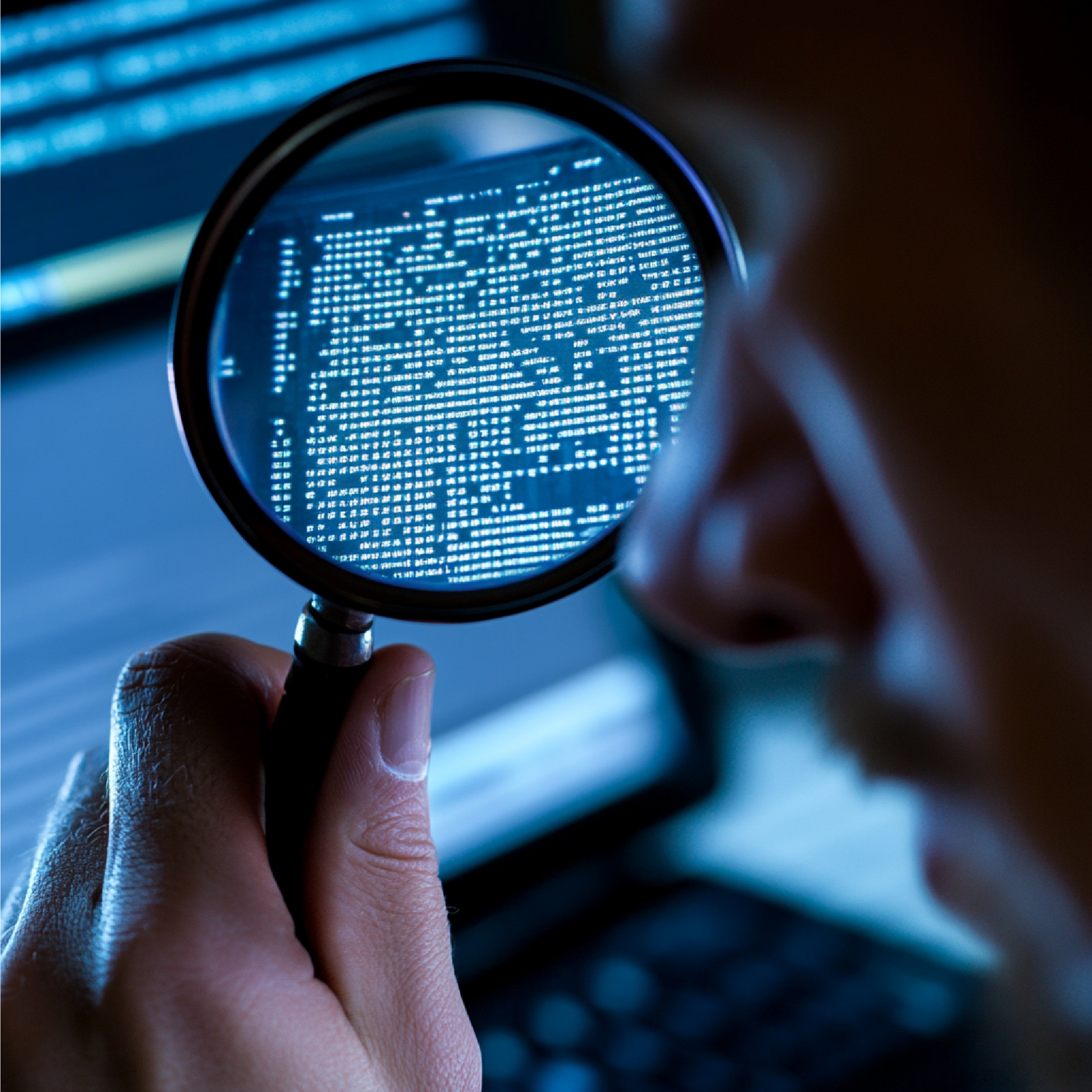
What does Cyber Threat Analysis involve?
Digital forensic analysis of computer systems and data aims to detect traces of cyber threats or security incidents, reconstruct the sequence of events, attribute actions to specific actors or perpetrators (where possible), and assess the root causes and consequences of the incident.
What do I offer?
- Analysis of data and key forensic artifacts (e.g. emails, event logs, registry entries, browser artifacts).
- Detection of suspicious activity, indicators of compromise, or traces of attacks on computers and servers.
- Rapid forensic triage in case of a security incident.
- Live forensic analysis (real-time, remote) of single or multiple endpoints simultaneously.
- Precise reconstruction of the sequence of events / timeline reconstruction.
- Advanced forensic analysis, including memory image and disk image analysis.
Process Step by Step:
- Reporting – report and determine the scope of the service.
- Data Collection – securing data for analysis.
- Analysis – I perform the analysis.
- Analysis Summary + Recommendations – depending on needs: confirmation, short summary, or detailed report.
We formalize cooperation with a contract.
Pricing is determined individually based on the type, scope, and complexity of the engagement.